Bananas & Rainforest DestructionEARTHTALK Dear EarthTalk: Is it true that bananas are taboo for anyone who is concerned about rainforest destruction? Even if I seek out “fair trade” or organic bananas, am I feeding the demand which is causing rainforest to be cleared?
-- Laura Barnard, Hillsboro, OH
Sadly, the short answers to these questions may be yes and yes for now, but that may change as the $5 billion banana industry slowly comes to terms with greener forms of production. Historically, growing the world’s most popular fruit has caused massive degradation of rainforest land across the tropics, spread noxious chemicals throughout formerly pristine watersheds, and poisoned and exploited farm workers.
“Banana plantations were infamous for their environmental and social abuses, which included the use of dangerous pesticides, poor working conditions, water pollution and deforestation,” reports the Rainforest Alliance, a New York-based non-profit that has been working to improve worker and environmental conditions in the industry since 1990. “Pesticide-impregnated plastic bags, which protect bananas as they grow, often littered riverbanks and beaches near banana farms, while agrochemical runoff and erosion killed fish, clogged rivers and choked coral reefs.” Also, the proximity of housing to banana fields, coupled with lax regulations for pesticide handling, led to frequent illness among workers and people living near the plantations. 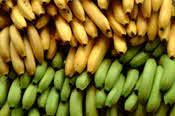 Banana production has long been known for its environmental and human rights abuses, which have included the use of dangerous pesticides, water pollution, deforestation and poor working conditions. But that is slowly changing thanks to the work of The Rainforest Alliance, the Sustainable Agriculture Network and other nonprofit groups. Banana production has long been known for its environmental and human rights abuses, which have included the use of dangerous pesticides, water pollution, deforestation and poor working conditions. But that is slowly changing thanks to the work of The Rainforest Alliance, the Sustainable Agriculture Network and other nonprofit groups.
Photo: "Ian Ransley Design, courtesy Flickr." |
|
But help is on the way, largely thanks to the pioneering work of the Rainforest Alliance, which certifies as sustainable those banana farms and plantations that meet certain criteria for responsible farm management set by the Sustainable Agriculture Network, a coalition of non-profits striving to improve commodity production in the tropics. As a result of the program, some 15 percent of all bananas sold internationally now come from Rainforest Alliance Certified farms. The group is especially proud of its agreements with two of the largest growers, Favorita and Chiquita. All of Favorita’s farms in Ecuador and all of Chiquita’s farms in Guatemala, Honduras, Costa Rica and Panama are certified sustainable under the program.
While the Rainforest Alliance’s success is certainly a step in the right direction, other groups bemoan the fact that even certified plantations are on land that was once tropical rainforest. According to Rainforest Relief, Americans should still avoid purchasing bananas altogether and instead opt for fruit grown locally, such as apples, peaches, cherries or pears. The group is hopeful, though, that its work with farm cooperatives growing organic bananas under the shade of a diverse forest canopy in Costa Rica can eventually drive the larger international banana market toward better land use and worker safety standards.
“These growers are for the most part farming only small portions of the land they own or control, the rest being left as montaña — undisturbed forest — to keep their flowing water fresh and keep healthy the wildlife that ‘works’ their farms with them,” reports Rainforest Relief. The group has been working to develop secondary markets for bananas that may have been bruised during harvest or transport but which can still be used for baby food, vinegar and other applications that don’t require unblemished peels. Some of these products are marketed to tourists in Costa Rica while others are sold in the U.S. — look for the Rainforest Farms brand, among others — at Whole Foods and other natural foods retailers. 
CONTACTS: The Rainforest Alliance, www.rainforest-alliance.org; Chiquita, www.chiquita.com; Rainforest Relief, www.rainforestrelief.org
SEND YOUR ENVIRONMENTAL QUESTIONS TO: EarthTalk®, c/o E – The Environmental Magazine, P.O. Box 5098, Westport, CT 06881; earthtalk@emagazine.com . E is a nonprofit publication. Subscribe: www.emagazine.com/subscribe.
|